


All about Teambuilding & Event Management
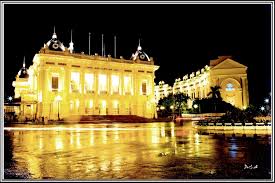
What role has French architecture played in Hanoi’s architectural identity?
French popular styles influenced the creative work of French architects, who then tried to adapt these styles to Vietnam’s tropical environment. The result was a unique elegance: The Indochinese Architectural Style. The buildings created by these French architects and by Vietnamese who adapted the style even further are part of Hanoi’s architectural and cultural heritage and, in particular, add to the richness of the capital’s “French Quarter”
Where is the “French Quarter”?
During colonialism, a Vietnamese person stepping into Villa Francaise (The French City) – which was sometimes also known as the Westerner’s Quarter – felt like a foreigner in the capital of his own country. Today, Hanoians still refer to that sector of the city as the “French Quarter”.
During colonialism, a Vietnamese person stepping into Villa Francaise (The French City) – which was sometimes also known as the Westerner’s Quarter – felt like a foreigner in the capital of his own country. Today, Hanoians still refer to that sector of the city as the “French Quarter”.
The French Quarter’s main artery is Trang Tien street. Trang tien was famous during the colonial era for its imposing department store – Les Grands Magasin Reunis on the corner of Trang Tien and Hang Bai streets – as well as its café with live music, its luxurious hotels and restaurants, chic cinemas, and, of course, the majestic Municipal Theatre. During colonialism, the spacious nearby avenues also bore French names such as: Boulevard Gambetta (now Tran Hung Dao street) and Boulevard Felix Faure (now Tran Phu). The magnificient trees and lavish neo classical villas on these streets contrasted with the Ancient’s Quarter narrow, compact lanes devoid of trees and teeming with Vietnamese residents.
Hoan Kiem was and is the hub of Hanoi’s administrative, economic, commercial and public service sectors. Its examples of remarkable French architecture include Saint Joseph’s Catheral (40 Nha Chung street, designed by an unknown architect and finished in 1883); the Municipal Theatre (a smaller version of the Opera House in Paris designed by Charles Garnier, 1 Trang Tien street, finished in 1911), the Government Guest House (12 Ngo Quyen street, formerly the Residence of the French Resident Superior of Tonkin, finished by architect Auguste – Henri Vildieu in 1911); the General Office of the Labour Union (65 Quan Su, finished by an unknown architect in 1902), the Supreme Court (48 Ly Thuong Kiet street, built between 1900 and 1906 by Auguste – Henri Vildieu), the History Museum (formerly the French Institute of Oriental Study Louis Finot Museum at 1 Pham Ngu Lao street), the Pasteur Institute (1 Yersin street) as well as many magnificent private villas. During colonialism, the Wesrtern Quarter also covered a vast area beyond the citadel that was limited on the North by West Lake and on the west by To Lich River. Today, the extension is in Ba Dinh District and includes many examples of French architecture as well as many fine houses that are now embassies.
Traveling to Hanoi, many foreigners who come from various countries could discover the beauty of Western Quarter, in particular French Quarter would become unmermorable time for you.
Traveling to Hanoi, many foreigners who come from various countries could discover the beauty of Western Quarter, in particular French Quarter would become unmermorable time for you.
If you have any request or question about the trip of discovering the Western's Quarter in Hanoi, please contact us as information bellow:
HANOI ETV MEDIA AND TRAVEL JOINT STOCK COMPANY (ETV HANOI., JSC)
Headquarter: 57 Luong Ngoc Quyen street, Hoan Kiem, Hanoi, Vietnam
Office address: 125 Kham Thien street, Ba Dinh, Hanoi, Vietnam
Tel: +84 (4) 3935 2617 +84 (4) 3935 2617/ 667 18813/ 3926 4834/ - Fax: +84 (4) 3935 2618
+84 (4) 3935 2617/ 667 18813/ 3926 4834/ - Fax: +84 (4) 3935 2618Hotline: (84)9.62.64.11.66(84)9.62.64.11.66 (Ms Yen) (24 hours - 7 days)
(84)9.62.64.11.66 (Ms Yen) (24 hours - 7 days)Email : haiyen@hanoiteambuilding.com
Website: www.hanoiteambuilding.com
Similar

Online Support
| Ms Yen Team Leader - 01 | ||
| 096264.1166 |  |
|
| Mr Thoa Consultant -02 | ||
| 0906.258.502 | |
|
| Mr Hợp Consultant - 03 | ||
| 0904.596.138 | |
|
| Ms Mai Consultant - 04 | ||
| 0974 744 114 | |
|
| Ms Hà Consultant - 05 | ||
| 0962.589.987 | |
|
| Ms Ha - Manager | ||
| 0988 678 064 | |
|
Ordinary Event
Specialized Event
Annual Event
Many famous foreign companies in Vietnam became the main partners of Hanoi ETV such as: Puma energy, Addon Development, Vestergaard Frandesen, AkzoNobel, Prentow Vietnam… or many famous brands in the same manner with Techcombank, K+, FPT soft, Gerber Sientific Internation, and Vietnam airline…. More infor Click
ETV in Hanoi Head Office: 57 Lương Ngọc Quyến Str, Hoàn Kiếm Dis, Hà Nội, Vietnam Head Office: 57 Lương Ngọc Quyến Str, Hoàn Kiếm Dis, Hà Nội, VietnamOffice: 2nd Floor, No.1/51 Đốc Ngữ Str, Liễu Giai,Ba Đình Dist,Hà Nội.  04 667 188 13 Fax: 04 3926 4835 04 667 188 13 Fax: 04 3926 4835 etv@hanoiteambuilding.com/ info@hanoiteambuilding.vn etv@hanoiteambuilding.com/ info@hanoiteambuilding.vn |
Hanoi ETV Media and Travel JSC., License: 0106055496 issued by Hanoi Authority for Planning and Investment Representative: Nguyễn Thị Thu Hà/Ms Hotline : 0988.678.064 - Ms Hà |
 Copyright |